Disability History Month: My 80 years of change
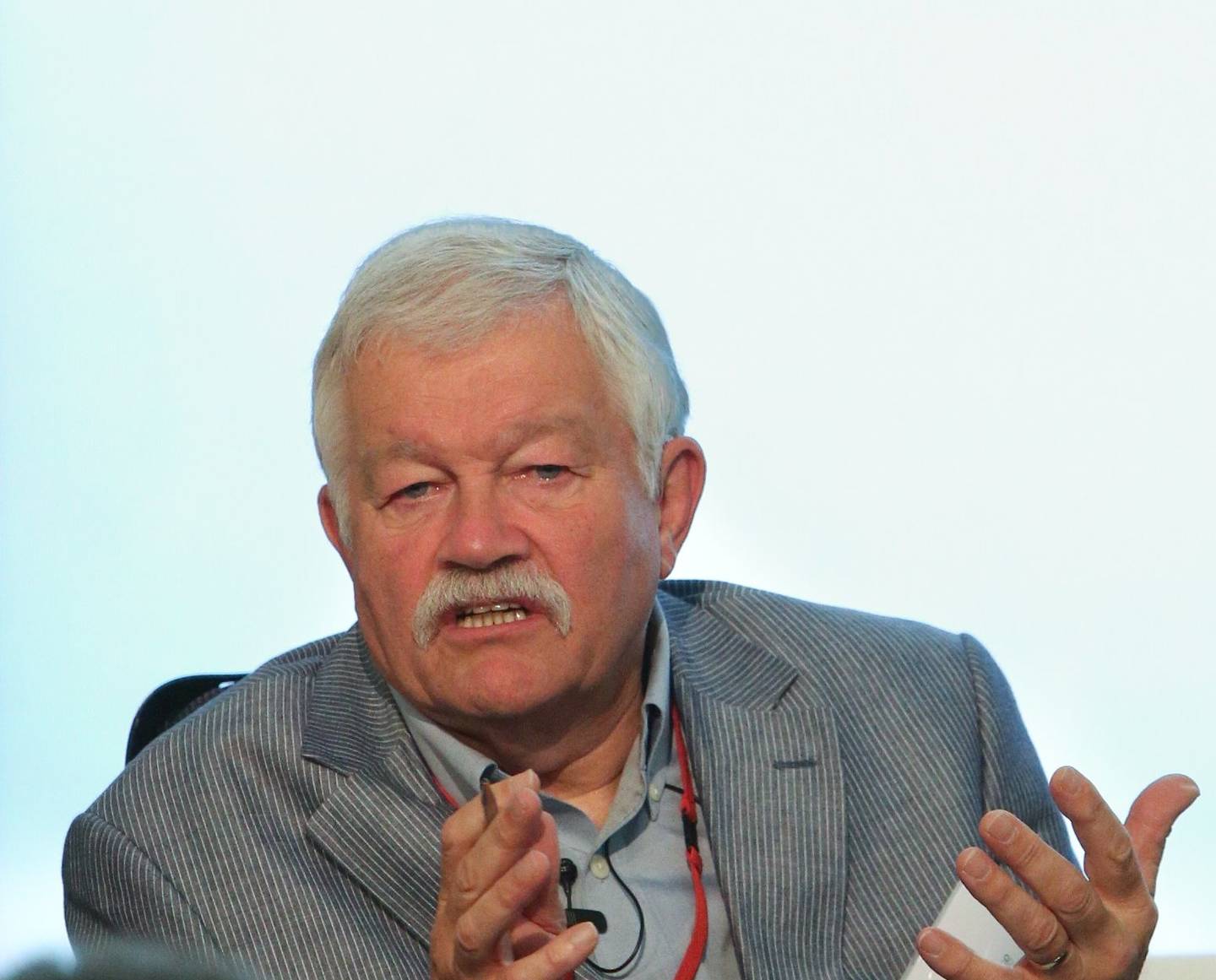
Disability History Month 2025 takes place from 14 November to 20 December. This year marks 30 years since the Disability Discrimination Act (DDA), highlighting the ongoing fight for equality and recognition of disabled people’s rights. Here, our Vice President, one of the UK's leading specialists on disability matters, Phil Friend OBE, talks openly about his life and experiences at 80 years old.
Reaching 80 gives you plenty of time to look back, although my family would say I’ve been rehearsing this article for years! Still, Disability History Month feels like the right moment to stop and take stock of how far we’ve come, and how far we still need to go.
A good place to start is 1948. I wasn’t following politics, but one decision shaped my life: the creation of the NHS. Without it, I doubt I’d be here. I caught polio in 1949, and the care I received quite literally saved my life.
My education took place in residential boarding schools for disabled children. These were well-meaning places, but nobody would mistake them for the fast track to university. I never sat an exam. Physical education was nonexistent. We did basket weaving and macramé instead. (Two skills I’ve rarely been asked to demonstrate since). Expectations were low, and the outside world felt a long way off.
When I left school at 16, my first act of independence was applying for an ‘invalid carriage’, a three-wheeled, bright blue contraption we called a ‘Noddy’. Unsafe, unreliable, and about as weatherproof as a sieve, but it gave me freedom. That mattered more than anything.
“We weren’t just playing- we were building something”.
Sport arrived in my life thanks to an old school friend who invited me to join the South London Aces, a wheelchair sports club. I loved it. Being part of the basketball team was a revelation. We weren’t just playing- we were building something.
The world around us, though, wasn’t quite ready. Access and attitudes were stuck somewhere around the Stone Age. I remember the team being asked to leave the Sobell Sports Centre in the 1960s because our chairs had black tyres that might mark the floor. No rights existed to challenge that sort of thing. Trains, buses, and taxis - none of them were accessible. Travelling by rail meant being loaded into the guard’s van with the parcels and bicycles. Heating wasn’t included nor was a fare reduction!
Things began to shift slowly. The 1970 Chronically Sick and Disabled Persons Act gave disabled people their first statutory rights, a quiet but important milestone. But discrimination remained perfectly legal. In 1969, I applied to Manchester University to study social work and was rejected because they didn’t believe I could look after myself away from home. Today it would make the headlines; back then it barely raised an eyebrow.
Alongside experiences like mine, a broader disability rights movement began to take shape. First in local communities, then nationally. In the 60s, 70s and 80s, Disabled People’s Organisations (DPOs) emerged, run by disabled people rather than for them. Groups like BCODP, the British Council of Disabled People, built political voice and confidence. DAN (Direct Action Network) took to the streets, chaining themselves to buses and blocking traffic to protest inaccessibility. They were noisy, bold, and impossible to ignore.
Rights Now, an alliance including MIND, Mencap, RNID, RNIB, Scope and RADAR, helped put disability rights firmly on the national agenda. Out of these campaigns came slogans that still echo today: Nothing About Us Without Us and the punchier, more provocative P*ss on Pity, which challenged charity-based assumptions head-on. All of this activism played a crucial part in securing the Disability Discrimination Act in 1995 - a real shift in the legal landscape.
“Disabled athletes were no longer hidden away.”
Sport continued to be a bright thread in my own journey. I travelled across the country for basketball competitions, and competed at the National Games at Stoke Mandeville. Back then, the facilities were essentially old army huts, freezing in winter, but those huts were the birthplace of the Paralympic movement. The transformation of the site into a world-class sports centre mirrored the change happening more widely.
Then came the 1988 Seoul Paralympics. Our Honorary President at Activity Alliance, Tanni, Baroness Grey-Thompson, won her first medal there - a bronze in the 400m. It was the start of an extraordinary career and a turning point for Paralympic sport in the UK. Disabled athletes were no longer hidden away; they were on the world stage, inspiring thousands to take part in sport and physical activity.
Attitude shifts
From the 1980s onwards, change accelerated. We saw the growth of accessible transport, personal assistance, and the rise of independent living. Attitudes shifted too - slowly, sometimes painfully, but they shifted. Sport became a route to confidence, community and health for thousands of disabled people. That growing awareness is something Activity Alliance has helped nurture for years.
But progress is never guaranteed. Despite everything we’ve achieved, disabled people still face deep inequalities in sport and physical activity. Access remains patchy. Opportunities aren’t evenly spread. Many people still feel sport or physical activity “isn’t for them” because of poor design, low expectations or outdated attitudes. If the next 80 years are to be different, we need organisations with the determination, and the staying power, to keep pushing. That’s where Activity Alliance comes in.
The task ahead is clear. Activity Alliance must continue challenging the barriers that hold people back, whether that’s inaccessible facilities, under-funded programmes, or the quiet assumptions that shape who gets to take part. It must keep working alongside disabled people and their organisations, never on their behalf but always with them, to make sure sports and physical activities are genuinely open to all. And it must hold the whole system to account - schools, leisure providers, policymakers, funders, local authorities, national bodies and crucially, government. The next 80 years should be about turning inclusion from a project into a given. We’ve come a long way, but with Activity Alliance leading the charge, we can go much further still.