Tim Hollingsworth: Reflections on being a Disability Access Ambassador
Tim Hollingsworth OBE is approaching the end of his tenure as the Government’s Disability and Access Ambassador (DAA) for sports and physical activity in January. After three and a half years in the role, he reflects on what the position has meant to him, the progress made, and the challenges that remain.
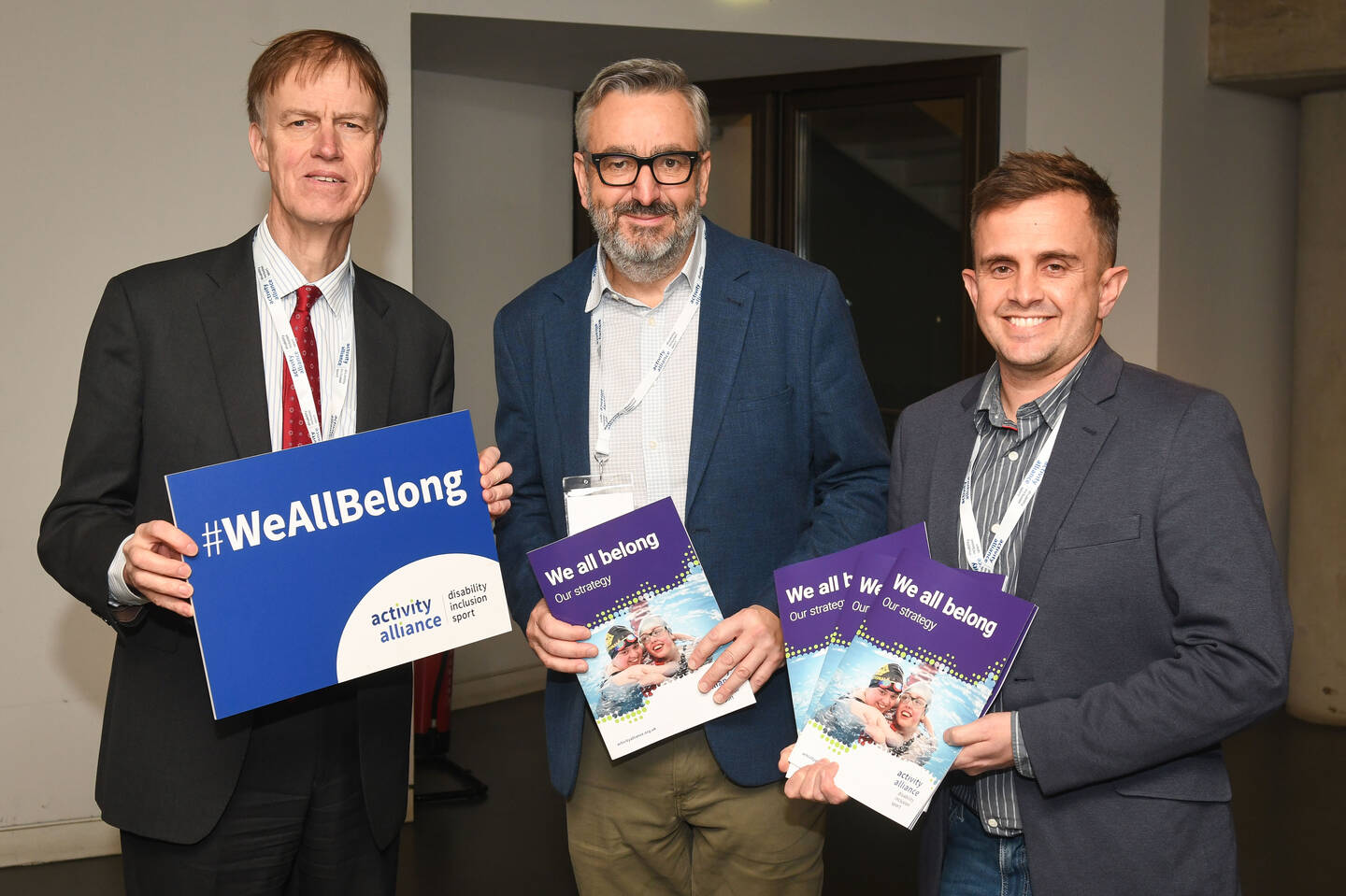
“I have enjoyed the role,” he begins. “Its purpose is very clearly set out by Government as being someone who can bring industry expertise and support connection. There are many Disability and Access Ambassadors across various sectors, and our purpose is to ensure that we are connecting with each other, learning from each other, sharing with each other, and where possible, collaborating.
“Everyone on the Ambassador group is motivated by the same things - a belief that there is a need to address opportunity and access in their industry and a desire to do something about that.”
In sport and physical activity, Hollingsworth had a strong platform as Chief Executive of Sport England for most of his time as DAA. “That was the kick-off point really,” he says. “The most important thing that I found beneficial was that group and how I was connected into it. When you have people like Hector Minto, global lead at Microsoft for accessibility, or Giles Barker at Channel 4, the media DAA—these are people with whom I could find real benefit in engaging, collaborating, and sharing.”
Hollingsworth admits that the role also gave him a level of political access. “It wasn’t impossible for me as Sport England CEO to get access to the Minister for Disabled People or senior officials, but as a DAA, every quarter we would have a ministerial meeting and update. Over time, inevitably, that enables you to build a relationship with the Minister and officials on a slightly different basis.”
This access matters because, as he explains, “If the job is to try and seek to influence them and engage them, then having that DAA position is a further benefit to what you’re trying to achieve anyway. The ability to have a platform, a meaningful connection, and be listened to by ministers and officials.”
Reflecting on his broader career, Hollingsworth says, “My care for disability sport was born primarily out of my engagement with elite sport and the Paralympics. First at UK Sport and then at ParalympicsGB. But it was there that we started to recognise the broader challenge faced by disabled people across every walk of life.”
One piece of work he is proud of is Sport England’s Accessible and Inclusive Sports Facilities guidance. “Lots of colleagues were involved, but so was Jean Hewitt, the DAA for the built environment. We presented that guidance jointly to the DAA network, and as a result, it got far more connected. Issues raised in sporting facilities became relevant to non-sporting facilities as well.”
Tackling barriers and perceptions
Asked about the biggest remaining barriers, Hollingsworth highlights three areas: physical environment, social inclusion, and political challenges.
“Sport uniquely has to think about inclusion from a built environment perspective, designing facilities from the outset to accommodate disability sport. That includes provision of equipment, whether wheelchairs for wheelchair rugby or facilities for blind sport.
“There’s a massive job to be done in getting coaches more aware of inclusive practice, getting clubs to think about whether they are genuinely welcoming to disabled people.
“The PIP review is critical. Activity Alliance and Disability Rights UK research continues to show fears of losing benefits by being active. Government needs to be clear that sport and physical activity are welcomed as part of a disabled person’s life. And the assessment process must change to stop penalising people for being active.
“We continue to see cases highlighted in the media of disabled people losing benefits because they are active. It’s not only unacceptable, it’s unconscionable. Paralympians have said PIP is fundamental to their training, yet they’re seen as the most active disabled people. It doesn’t make sense.”
Involving disabled people in policy
“The best answer to how disabled people can shape policy is to think about local delivery and place,” says Hollingsworth. “This is where Activity Alliance plays such a critical role, and that's what the principle of a Sport England system partner is. Being able to represent in a national context the decisions that are being made. But locally, I would hope that disabled groups and disabled people are involved in conversations.
“Attitudinal change happens when people, particularly non-disabled people, are exposed to realities within their club or community group. Very often, that can only happen with the lived experience of disabled people being part of that. Greater involvement of disabled people in decision making, volunteering, and coaching is key. Until that happens, you’re just going to perpetuate the challenge that exists. The real answer is local decision-making and devolution of funding.”
He points to examples in Manchester, Essex, and Exeter: “Thinking locally and acting locally is genuinely a way of overcoming traditional barriers.”
Advice to his successor
Though stepping down as DAA, Hollingsworth plans to stay involved:
“I want to use my role as Vice Chair at the British Paralympic Association to stay on the social impact side as much as on the elite side.”
Finally, Hollingsworth offers three pieces of advice to his successor.
“Use the opportunity to connect with other DAAs. There’s a wealth of knowledge and fantastic crossover. Engage with government policy and welfare challenges. Connect with partner organisations and disabled people so they understand what you’re trying to achieve.”