Major sporting events must leave an inclusive legacy
From London 2012 to last month’s Commonwealth Games in Glasgow, the UK has a strong track record of hosting major sporting events. Looking ahead to UEFA EURO 2028 and a potential North of England Olympic and Paralympic bid in the 2040s, policymakers face a crucial question. How can elite sporting success and investment deliver lasting improvements in accessibility, participation and opportunity for disabled people at grassroots level?
Major events bring investment in infrastructure, regeneration and community engagement. But for disabled people, true success is not only measured in venues, medals or visitor numbers. It is measured by whether events remove barriers and create more inclusive opportunities in every community.
Across the UK, grassroots sport and physical activity facilities still vary significantly in accessibility. While elite venues often meet high standards, local sports centres, leisure facilities, community clubs and outdoor spaces can still have barriers. From inaccessible changing facilities and limited adaptive equipment to poor transport links, limited staff training and a lack of inclusive programmes.
This inconsistency reflects a wider policy challenge. Accessibility is too often treated as an enhancement rather than a fundamental requirement. To achieve greater outcomes, inclusion is better when embedded in the planning, funding and regulation of community sport. We are keen to see national and local government setting clearer accessibility standards for publicly funded facilities and ensure investment includes dedicated resources for inclusive design, maintenance and upgrades.
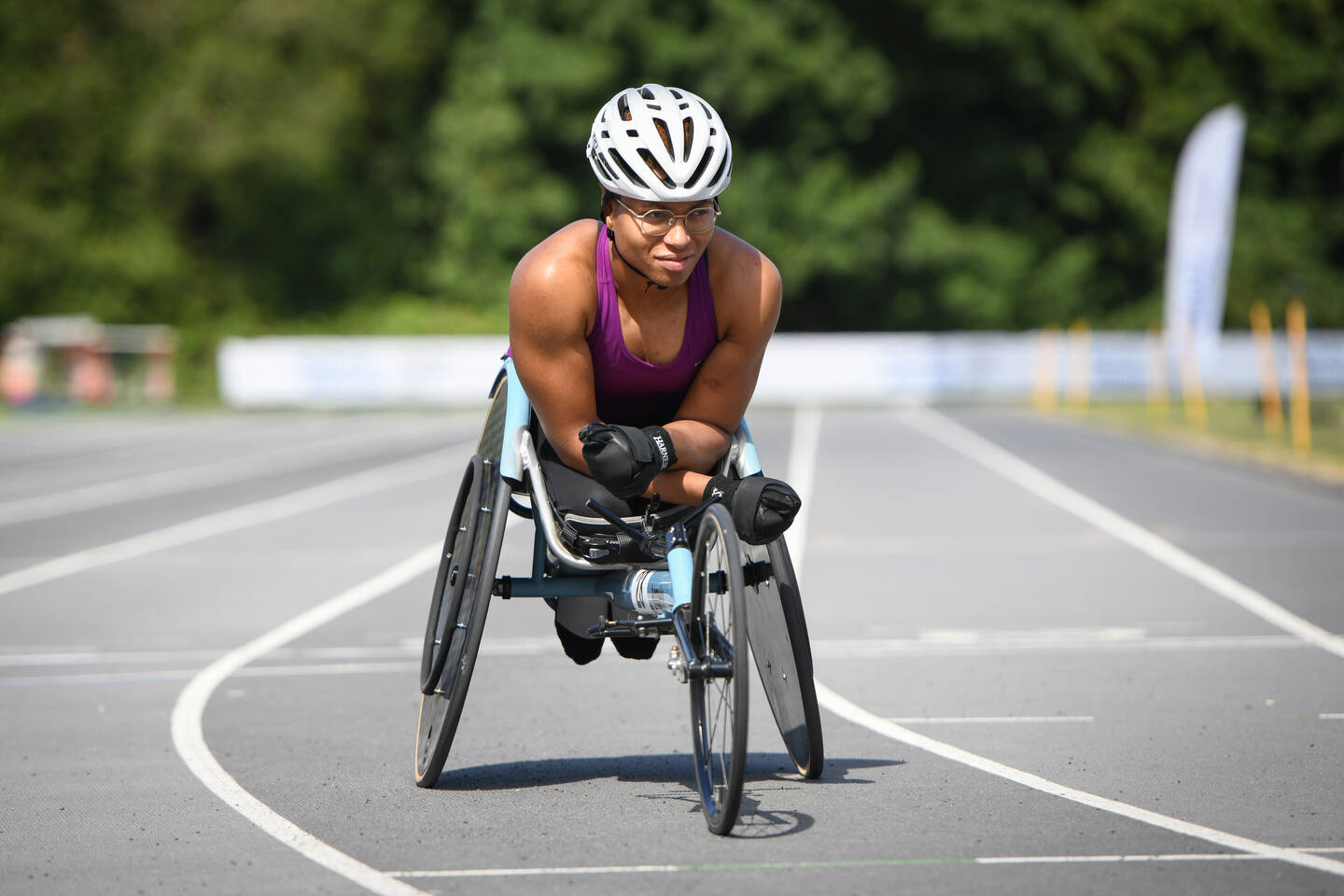
Karé Adenegan started wheelchair racing at 11 after being inspired by the London 2012 Paralympic Games, having previously been excluded from PE lessons at primary school because of her cerebral palsy. She went on to win medals at Rio 2016, Tokyo 2020 and Paris 2024, become a 12-time World Championship medallist, and now supports the Activity Alliance National Junior Athletics Championships as its inaugural ambassador. She said:
"Every elite athlete starts somewhere, and for disabled people that first step is often shaped by whether local facilities are welcoming, accessible and inclusive. If we want more disabled people to take part, enjoy sport and reach their potential, accessibility has to be built in from the beginning - from community clubs and local gyms right through to major events. Major events should create a legacy promoting and providing access to sport for all."
Accessible facilities create the foundation for participation and talent development. Whether someone is joining a gym, taking part in community sport for the first time, or developing as an athlete, everyone deserves welcoming and inclusive environments. Investment in accessibility is therefore not only a sporting issue, but a public health, equality and community priority.
Accessibility is also vital for developing and retaining talent. As disabled and non-disabled athletes increasingly compete at integrated events, there are opportunities to raise the profile of disabled people in sport and show inclusion as an integral part of the sporting landscape.
However, integration is not automatically positive. Disabled athletes can be overshadowed, receive less media coverage or be confined to limited programme slots. Policymakers, governing bodies and organisers must ensure integration delivers equality through fair scheduling, visibility, facilities, prize money, media coverage and investment pathways. Success should be measured by whether events strengthen routes from grassroots participation to elite competition.
The benefits extend beyond athletic achievement. Local clubs and community activities offer social connection, confidence and belonging, helping to tackle loneliness. Our latest Annual Disability and Activity Survey (ADAS) found that among disabled people who reported feeling lonely sometimes, often or always, more than two-thirds (68%) agreed that being active could help them feel less lonely.
Policy action must also go beyond traditional sports facilities. We know that many disabled people prefer to be active in parks, green spaces, waterways, playgrounds and other community settings. These spaces can be flexible, informal and affordable, but can also present major accessibility challenges.
Too often, accessibility in green, blue and public spaces relies on voluntary guidance rather than enforceable standards. Our research shows disabled people are more likely than non-disabled people to prefer being active outdoors, yet fewer than half (46%) say it is easy to physically access outdoor spaces, compared with 81% of non-disabled people.
Addressing this gap requires a stronger policy framework. Accessibility should be a core requirement in the design and refurbishment of public spaces, including accessible pathways, inclusive play areas, toilets, clear wayfinding, suitable parking and meaningful consultation with disabled people.
The potential Olympic and Paralympic Games in the North of England is an opportunity to think differently about legacy. If a future bid moves forward, accessibility and inclusion must sit at its heart from the start.
London 2012 showed the value of investing in long-term social outcomes alongside major events. One example is Spirit of 2012's support for Get Out Get Active (GOGA), which has helped some of the UK's least active people become more active through fun, inclusive activities. Across nine years, the programme has reached 62,000 people, with more than 38,500 participants taking part in 3,700 activities and interventions, supported by over 4,700 volunteers.
Future major sporting events must drive lasting change in the places disabled people live, move and take part every day. That means legacy plans with sustained funding for inclusive community programmes, stronger accessibility requirements for local facilities, clear talent pathways and disabled people involved in decisions from the start. The success must be measured not only in stadiums and economic growth, but in whether more disabled people can access, enjoy and benefit from sport and physical activity throughout their lives.