Back to school: why disabled children need equal play
As children return to school after the summer holidays, attention naturally turns to classrooms, timetables and new routines. But what happens beyond the classroom matters too. Every child should be able to enjoy physical education, school sport and physical activity. Yet too many disabled children are still being left on the sidelines.
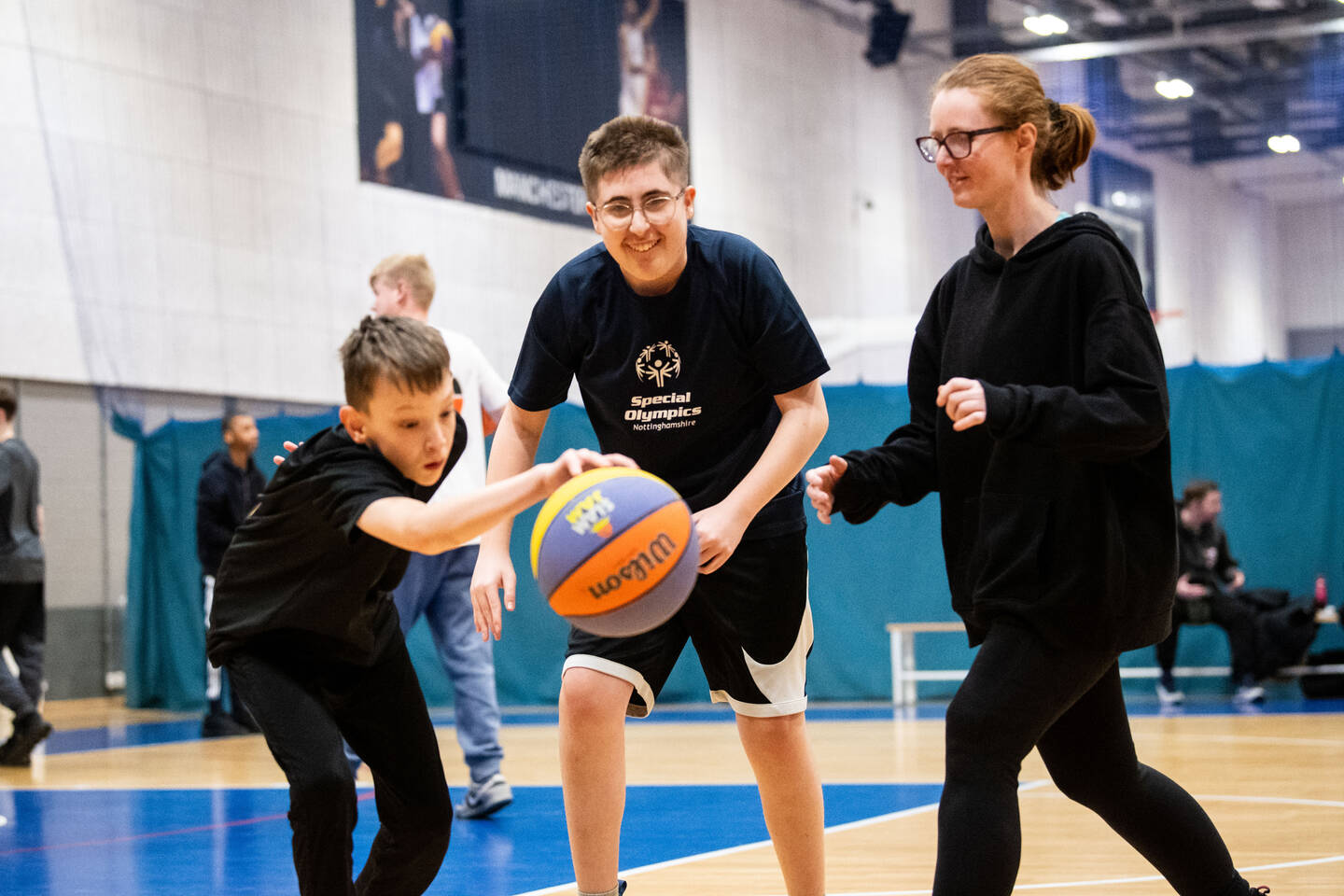
Two years after ParalympicsGB launched its Equal Play campaign, the question remains: how much closer are we to ensuring every child has the same access to PE at school?
Early experiences matter. When disabled CYP are welcomed into play, PE, school sport and wider physical activity, they do more than improve their physical health. They build confidence, independence, friendships and a sense of belonging that can shape participation throughout their lives.
But when children are left out, the impact can last. Being excluded from PE, school sport or local activities sends a powerful message that they do not belong. It can reduce confidence, limit social connection and make physical activity feel like something for other people. That is why inclusion in childhood is not a nice-to-have - it is the foundation for lifelong active lives.
In England, as of January 2026, there are approximately 1.86 million pupils with special educational needs (SEN), representing 20.8% of all pupils. This includes 1.32 million pupils receiving SEN support and 538,547 pupils with an Education, Health and Care (EHC) Plan. The number of pupils with SEN has increased by 5.2% in a single year, reinforcing the need for a PE and School Sport Partnerships Network that embeds inclusion, accessibility and targeted support throughout its design, delivery and evaluation (Statistics: Special educational needs in England - GOV.UK)
The start of the school year is a moment for renewed focus. It comes at a time of political change and a significant policy agenda. There is an opportunity to address the barriers that prevent disabled children from enjoying PE in school, while building on existing commitments like the social care reform.
In May, the Government announced major funding to support new PE and school sport, with targeted support to ensure all children can access equal opportunities for activity. Recent policy developments, including the National Youth Strategy and the Special Educational Needs and Disabilities (SEND) White Paper, are steps in the right direction. We need this progress to translate into practical change in schools. We continue to work with government and partners to ensure there is real change.
Our Chief Executive, Adam Blaze, joined a Parliamentary roundtable organised by ParalympicsGB and hosted by MP Marie Tidball earlier this year. The event brought Paralympians, national sports organisations and parliamentarians together to discuss how to improve access to sport and PE in school for disabled children.
Inclusion 2028, a Department for Education-funded programme is designed to improve the choices and chances of children and young people with SEND through targeted interventions in PE, school sport and physical activity.
Led by the Youth Sport Trust, Inclusion 2028 brings together a national network of Lead Inclusion Schools and a consortium of expert organisations, including Activity Alliance, nasen, ParalympicsGB and Swim England. Together, we are supporting schools across England to make PE and school sport more inclusive, so every pupil has the opportunity to take part and thrive.
Jill Puttnam, Head of Social Impact, ParalympicsGB said:
Paralympic athletes can demonstrate what disabled people can achieve, but children shouldn't have to reach elite sport before they experience belonging and opportunity through physical activity.
Inclusion isn't about asking disabled children to adapt to existing PE; the system should be equipped to adapt to them so that all children can meaningfully participate in PE, sport and physical activity alongside their peers.
Two years on from the launch of our Equal Play campaign, we have been pleased to see the Government taking the issue seriously by making inclusion and accessibility at the heart of their plans for the new curriculum and the Schools White Paper.
The challenge now is that, when we see the new curriculum implemented in Autumn 2028, that teachers are given the training and support to deliver inclusive PE and school sport from day one of the new curriculum.
Our recent research, Play, Move, Belong: Active Futures for Young Disabled People (Nov 2025) highlights a persistent gap in both activity levels and experiences between disabled and non-disabled CYP. The research found that young disabled people are less likely to feel sport and physical activity is for them, despite many wanting greater opportunities to be active, have fun, build confidence and feel they belong.
The evidence shows that young disabled people face more personal and practical barriers than their peers, including:
- Impairment-related challenges that can make some activities more difficult.
- Loneliness and isolation, which can reduce motivation.
- Low confidence and fear of being judged, often linked to negative past experiences.
- A lack of knowledge about what activities are available or how to get involved.
From this research, we produced useful infographics.
Impactful resources and training
The inclusive education hub offers lots of support for teachers or school staff to review and improve inclusive physical education and school sport delivery. It is all made possible through the Department for Education funded, Inclusion 2024 project.
Activity Alliance’s Inclusive Activity Programme (IAP) has launched a new CIMSPA accredited workshop specially designed to ensure children with special educational needs and disabilities (SEND) are included within PE and school sport. Inclusive Activity Programme Schools workshop
Future change
To ensure more disabled children feel they belong in sport and physical activity, bold, practical action is needed. This must be a joined-up approach that brings decision makers, schools, providers, teachers, families and young people together. Priorities include:
- Equip and train teachers. Provide the right tools, resources and adapted initial and ongoing training so current and future teachers have the skills and confidence to deliver inclusive PE.
- Make inclusive PE a system priority. Redefine PE’s role in the school curriculum and embed inclusion across the education system, so inclusive practice is recognised, funded and monitored at every level.
- Change attitudes through awareness campaigns. Campaigns such as ParalympicsGB’s Equal Play can challenge stereotypes, promote positive stories and encourage schools and communities to embrace inclusion.
Back to school should be a moment of possibility for every child. If inclusive PE is properly prioritised, funded and supported, more disabled children will be able to take part, build confidence and experience the benefits of being active alongside their peers.