Enhancing inclusive practice: Wheels for All
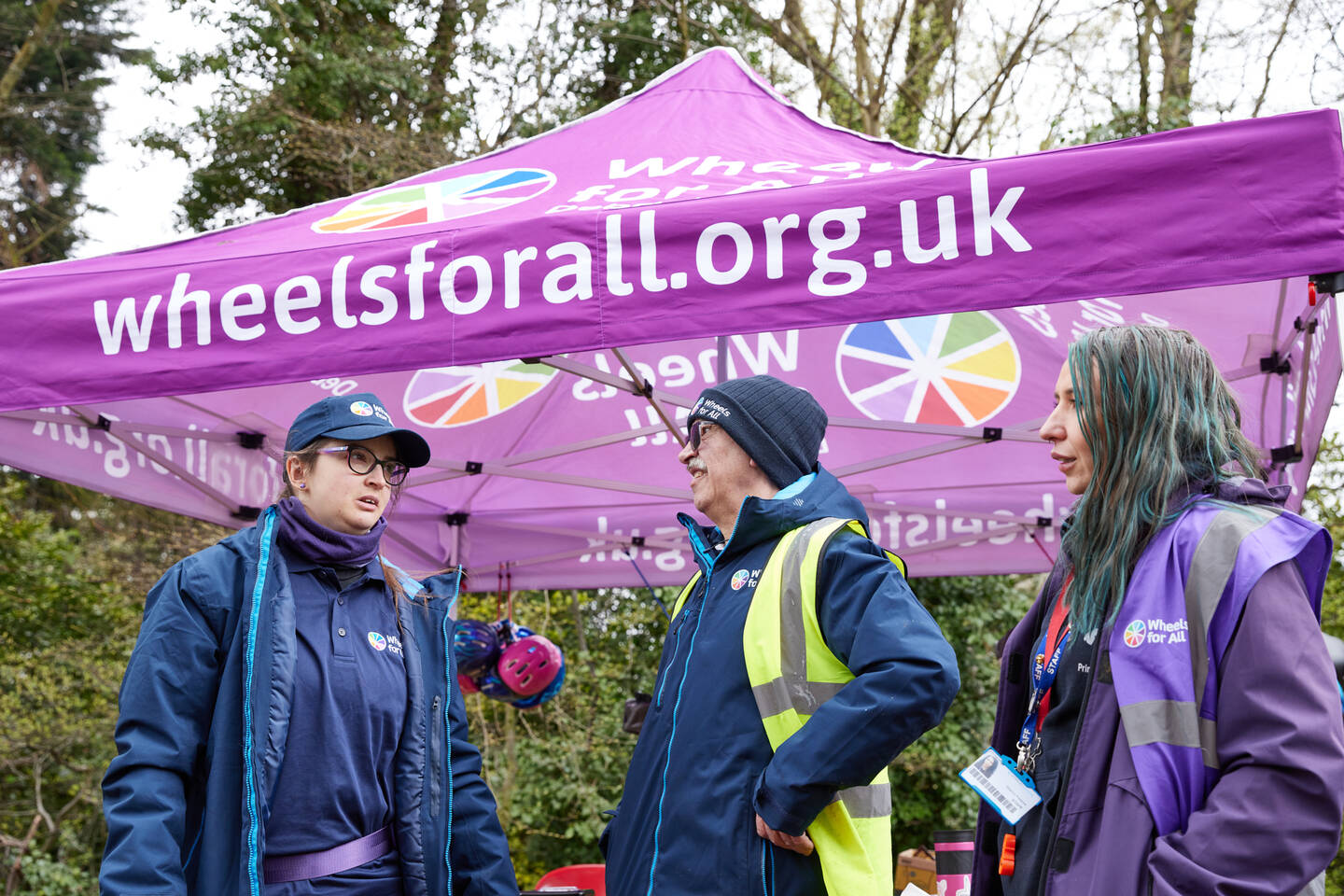
Wheels for All has inclusion at the heart of what it does. Across the country, the charity provides inclusive cycling opportunities, supported by around 200 volunteers. However, the team wanted to look beyond the experience of people taking part in its cycling sessions. They wanted the same commitment to inclusion to be reflected in the experience of their volunteers.
That led Wheels for All to join the Include to Improve programme, led by Activity Alliance and Sport for Confidence, funded by Sport England.
Looking at inclusion differently
Wheels for All already had an inclusive culture. Its team was happy to adapt opportunities, make adjustments and provide individual support.
The challenge was that prospective volunteers didn’t necessarily know that.
Through Include to Improve’s Inclusive Recruitment offer, five volunteer documents were independently reviewed. The resulting report identified practical ways to make the volunteering journey more accessible and inclusive.
For Rhys Phillips, National Volunteer and Impact Manager, one of the biggest discoveries was how achievable many of the improvements were.
“I saw that making several small changes would have big benefits.”
Making inclusion clear from the start
One of the most important changes was simple.
Wheels for All had always been willing to provide adjustments and tailor support to individual volunteers, but this wasn’t being communicated clearly.
Now, information about the support, flexibility and adjustments available is provided upfront. Prospective volunteers no longer need to ask what support might be available to them.
It is a shift from waiting for someone to ask for inclusion to making it clear from the beginning that they are welcome.
The organisation has also improved the accessibility of its volunteer documents, including adding alt text to images, changing colours and text sizes, improving navigation and checking documents for use with screen readers.
Its volunteer handbook has been transformed into a more accessible central resource, bringing together information about induction, first sessions and the wider volunteering experience.
“This has opened my eyes to what is needed and will help raise the standard of future volunteer resources.”
Putting lived experience at the heart of change
Importantly, Wheels for All doesn’t want to assume that these changes work.
The organisation plans to gather feedback on its revised documents from both their staff and volunteers, plus Include to Improve’s Lived Experience Network, giving disabled people the opportunity to influence whether changes are genuinely accessible in practice.
Some improvements will take longer. Changes to its volunteer management system require additional funding, while the team hopes to introduce Easy Read versions of its information soon. Longer term, it would also like to offer alternative formats, including audio and subtitled video.
But Include to Improve has given the organisation a clearer understanding of what to consider. Instead of finding workarounds when somebody encounters a barrier, new documents and processes can increasingly be designed with inclusion in mind from the start.
Sharing the learning
Additionally, through Include to Improve’s Strategic Partner Network, Wheels for All has also been able to share ideas, learn from others and build its knowledge around inclusion.
Now, the ambition is to spread that learning across the organisation. The lessons from the programme are already prompting the team to look at its website and other resources through the same accessibility lens.
As Rhys explains:
“We already have an inclusive culture and the mindset to consider everyone’s needs. What we need to do next is to ensure this is reflected in our infrastructure” - we operated in an inclusive way due to our culture and mindset but didn’t always have the most inclusive infrastructure to maximise this.”
Small changes, lasting impact
Include to Improve hasn’t changed Wheels for All’s belief in inclusion. It has helped the organisation identify where that belief wasn’t always visible in practice.
Through practical advice, shared learning and the voices of disabled people, Wheels for All is turning its commitment to inclusion into more accessible and consistent ways of working.
And its experience shows that inclusion doesn’t always start with major investment. Sometimes it starts by asking whether people know they are welcome, whether information works for them and whether accessibility has been considered before anyone needs to ask.