Our response to Active Lives Children and Young People Survey 2024-25
Today, Sport England has published the latest results from the Active Lives Children and Young People Survey for the academic year 2024-25. Over 130,000 pupils in Years 1-11 (aged 5-16) and their parents, took part in the survey. Activity Alliance’s research team has analysed the data to highlight the differences for disabled children and young people.
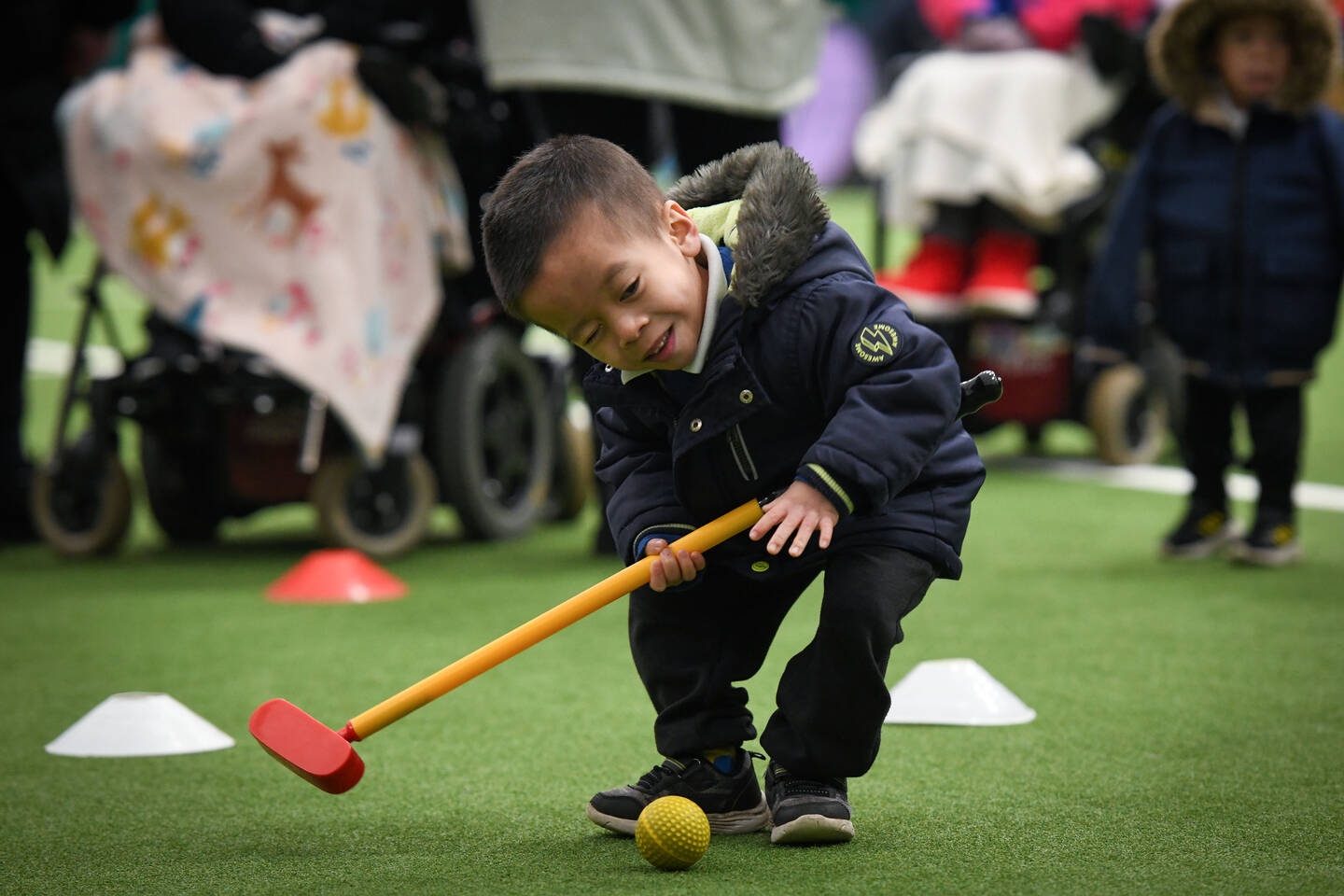
This year’s report reveals that inactivity levels for disabled children and young people remain similar to last year. Nearly a third (30.5%) of disabled children who took part in the survey are doing less than 30 minutes of physical activity each day. Findings also show that children with two or more inequality characteristics are the least active. An example of a child with two inequality characteristics would be a disabled girl.
Addressing the unchanged activity levels and inequality challenges for disabled children and young people requires a joint approach across the sector and beyond. We support Sport England’s collective action to drive meaningful change on children’s development and engagement with physical activity.
Responding to the findings, Adam Blaze, CEO of Activity Alliance, said:
"The fact that one in three disabled children are doing less than 30 minutes of activity a day shows we still have work to do to create opportunities for all. Throughout childhood, sports and activities help form friendships, improve mental and physical health and form the foundations for lifelong participation.
"We know from our own research that attitudes, confidence, and access all play key roles in limiting participation. It is on us all to break down the barriers that limit the opportunities disabled children and young people have in sports and activities.”
"Alongside our knowledge of the overwhelming appetite that young disabled people have to be active, today’s statistics show how important the collective work across the sector is."
Activity levels for disabled children
Inactivity levels remain significantly unchanged for the fifth year. 30.5% of disabled children were less active (doing less than 30 minutes of physical activity each day) this year, compared to 26.2% of non-disabled children. There has been a significant decrease in non-disabled children’s inactivity compared to last year, whilst disabled children remain similarly inactive compared to last year. This means nearly a third of disabled children continue to miss out on the well-established benefits of being active.
Similar to the past two years, and like non-disabled children, disabled children were most likely to be less active in school years 3-4 (ages 7-9), with 37.7% being less active. Additionally, one in 10 (11.5%) disabled children report not participating in at least two different activities on any day of the week.
Impairment differences
Among disabled children and young people, there are variations in activity levels based on impairment types. Children with hearing impairments (54.5%) are the most active, and children with impairments related to ‘co-ordination’ (35.3%) and ‘visual impairments’ (35.2%) are the most likely to be less active. There is a significant increase in inactivity from last year for children with co-ordination and visual impairments.
Similar to last year, half (50%) of disabled children with three or more impairments or long-term health conditions are active. The data does not show a correlation between being less active and the number of impairments. However, there are often challenges with inclusive research for large-scale surveys and data is not included for children from Special Education Needs (SEN) schools.
Our recent research, play, move, belong: Active futures for young disabled people, included children from mainstream and SEN schools. It found that disabled girls, young people with multiple impairments, those aged 14-16 and disabled young people in lower social grades are least likely to feel that sport is for them.
Released on World Children’s Day it explores the lived experiences of young disabled and non-disabled people, along with their parents and caregivers. It highlights a strong desire from disabled children and young people to be more active, when the right opportunities and support are in place.
It also found that attitudes, confidence, and access all play key roles in limiting participation.
The study was supported by a consortium of partners including Sport England, Youth Sport Trust, Access Sport, ParalympicsGB and Loughborough University. You can download an infographic summary of key findings on the Activity Alliance research page.
If you are looking for information and support on engaging children with specific impairments in sport and physical activity, we recommend contacting the National Disability Sports Organisations.
Wellbeing
Disabled children continue to report lower mental wellbeing scores than their non-disabled peers. Disabled children report lower levels of happiness, life satisfaction and life worthwhileness compared to non-disabled children, whose happiness, life satisfaction and life worthwhileness levels have significantly increased this year. The findings show an association between the more impairments a disabled child or young person has, and reduced happiness, life satisfaction and life worthwhileness.
Disabled children who report lowest levels of happiness, life satisfaction and life worthwhileness are those defining as “how you feel / mental health”, whereas those with highest levels are those defining as “breathing” related impairments and long term conditions. This is consistent with the previous year’s findings, with the only impairment difference being a significant decrease in life satisfaction for those with pain related impairments and long term conditions.
The findings show children and young people’s happiness, life satisfaction and life worthwhileness increases with levels of activity and involvement in volunteering. However, the data is not available specifically for disabled children. We know there are substantial wellbeing benefits for disabled adults and children being active and being involved in sport and activity.
Types of activities
Participation in activities is measured as sport and physical activity taken part in over the past seven days. 92% of 130,448 respondents completed an activity, with ‘sporting activities’ (80.4%) the most common ‘broad activity’ followed by ‘active play and informal activities’ (64%). While the type of activity data includes demographic details of age and gender, it does not detail disability. To repeat last year’s findings, the data for ‘types of activity’ doesn’t include any Paralympic or disability-specific sports or exercise, such as goalball or boccia. The types of activities included at mainstream and special schools will vary and this data does not capture types of activities in special educational needs (SEN) schools or Paralympic or disability-specific sports.
Volunteering
Like last year, nearly half (48.2%) of children and young people in school years 5-11 volunteered to support exercise and sports in the last year. Volunteering rates are slightly lower for disabled children (48.3%) compared with non-disabled children (49.9%). However, for both disabled and non-disabled children, this is a significant increase from last year.
The rate of volunteering to support sport and exercise among disabled children and young people tends to decrease with an increase in impairments or long-term health conditions. Just over half of disabled children with one impairment (52.5%), just under half of disabled children with two impairments (49.4%), and four in 10 disabled children with three or more impairments (46.3%) have volunteered in the past year. Children with three or more impairments have significantly increased volunteering this year (3.6% increase from last year).
Survey findings showed disabled children and young people with ‘hearing impairments’ (55.9%) tended to be the most likely to volunteering in exercise and sports in the last year, which has significantly increased this year. Children with ‘speaking and communicating’ impairments (41.3%) are least likely to volunteer. Alongside disabled children with hearing impairments, ‘concentrating and paying attention’, ’co-ordination’, ‘how you behave in a way which makes life difficult’, ‘moving around including walking and running’ and ‘reading or writing’ have all reported a significant increase in volunteering rates compared with last year.
Levels of volunteering to support exercise and sports tends to decrease in disabled children and young people with age, with disabled children in school years 5-6 more likely to volunteer than disabled children in school years 9-11 (70.3% vs 40.4%).
Spectating
Attendance of sporting events was measured by children and young people (in school years 5-11) attending at least two live sports events over the last 12 months. Overall, 46.4% of children and young people attended at least two live sports events, which is a significant increase this year. Disabled children (44.3%) were less likely to have attended at least two live sports events in the last 12 months compared with non-disabled children (48.2%). However, this is a significant increase from last year by 3.5% for disabled children and 2.1% for non-disabled children. The more impairment a disabled child or young person has, the less likely they were to have attended at least two live sports events in the last 12 months. There is a significant increase (4.3%) in attendance for children and young people living with three or more long-term limiting impairments compared with last year.
Whilst there are some significant changes compared with last year’s data, the likelihood of disabled children and young people attending at least two live sports events still decreases with age. Over 5 in 10 (50.5%) disabled children in school years 5-6 attended at least two live sports events, compared with 44.7% in years school 7-8, and 41.0% in school years 9-11 respectively.
When examining impairment type, almost half of disabled children and young people with ‘affects health for a long time (e.g. diabetes)’ impairment (48.6%) were the most likely to attend at least two live sports events in the last 12 months, whereas disabled children and young people with a ‘speaking and communicating’ impairment (36.7%) are the least likely to attend. Compared with last year, there are significant increases in attendance for disabled children with the following impairments and long term conditions; ‘concentrating and paying attention (includes ADHD)’, co-ordination and balance problems, ‘difficulty learning or understanding new things’, hearing impairments, ‘reading or writing (includes dyslexia)’ and ‘using numbers’.
Other inequalities
Like last year’s findings, levels of activity are seen to reduce with an increase in the number of inequality characteristics. Children and young people with two or more inequality characteristics are the most likely to be ‘less active’ (35.9%) and least likely to be ‘active’ (40.3%) than children and young people with one or no inequality characteristics. Sport England’s Inequalities Metric supports better understanding of what affects and impacts activity levels.
Income deprivation is a factor affecting children and young people's activity levels. The data shows that children and young people from the most deprived places are more likely to be less active (31%) than those from the least deprived places (25.7%).
Other persistent inequalities from last year are girls and other genders; Black, Asian and children from other ethnicities (with Black and Asian girls most likely to be less active); and children from less affluent families remain less active than their counterparts.
This shows the continued importance to consider social and demographic factors in addition to a child’s impairment or health condition.
Physical Literacy
The findings indicate disabled children and young people are less likely to agree with physical literacy outcomes. Disabled children are less likely to agree to having positive meaningful and enjoyable relationships with sport and activity, compared to non-disabled children (71% vs 84%). Disabled children are less likely to agree with learning and development outcomes relating to movement, connection, thinking and feeling, compared to non-disabled children (63.5% vs 77.6%). The data indicates the more impairments a disabled child or young person has, the less likely they are to agree with both of these. Those disabled children most likely to agree with both these are those defining as “reading or writing (includes dyslexia)” (72.3% and 65.9% respectively), whereas those least likely to agree are those defining as “speaking and communicating” (60.8% and 48.4% respectively).
Disabled children and young people are less likely to agree to having positive experiences, inclusion and opportunities, compared to non-disabled children (84.2% vs 92.3%). The more impairments a disabled child or young person has, the less likely there are to agree. Disabled children with co-ordination and balance related impairments or long term conditions are least likely to agree (76.7%), where as disabled children with impairments relating to ‘reading or writing (includes dyslexia)” are most likely to agree (85.0%).
Resources
We continue to support organisations and people who deliver activities to support disabled children and young people to be active. Here are some useful resources:
- Our recent research report, Play, move, belong: Active futures for young disabled people, explores young disabled people’s experiences and perception of sport and physical activity. An infographic summary of key findings is also available.
- Our Learning Hub provides access to CIMSPA accredited learning opportunities and courses to empower everyone with practical tools and creative ideas to make sport, activity and communication more inclu;sive.
- The Inclusive Education Hub has essential resources for education practitioners to support and improve inclusive physical education and school sport delivery.
- Our Inclusive PE activity cards provide teachers and school staff with downloadable, inclusive activity ideas to increase knowledge, skills, and confidence.
- Youth Sport Trust Inclusion Live week offers best practice for the inclusion of young people with SEND in PE, school sport, and physical activity.
- Activity finding websites such as Every Body Moves directs people to home-based and local inclusive activities and clubs within their local area and online.
- BBC Super Movers for Every Body offers a host of exciting free online curriculum-linked resources to engage disabled children and those with special educational needs in sport and activity.
- Paralympics GB’s Equal Play campaign calls for the UK Government to commit to ensuring every child has the same access to PE at school.
- The Chief Medical Officer guidelines recommend that disabled children and young people do 120-180 minutes of moderate-to-vigorous aerobic activity per week, plus three strength and balance activities per week. A coproduced infographic of the key messages and benefits is available.
More research or insight
Please get in touch with the research team at Activity Alliance to discuss the findings: research@activityalliance.org.uk