‘Celebrate the good’ – webinar shares benefits of Leading Inclusion
The first Leading Inclusion Community of Practice webinar brought together staff from across the sport and physical activity sector to share why they are engaging with the Leading Inclusion framework and the impact it is having in their regions.
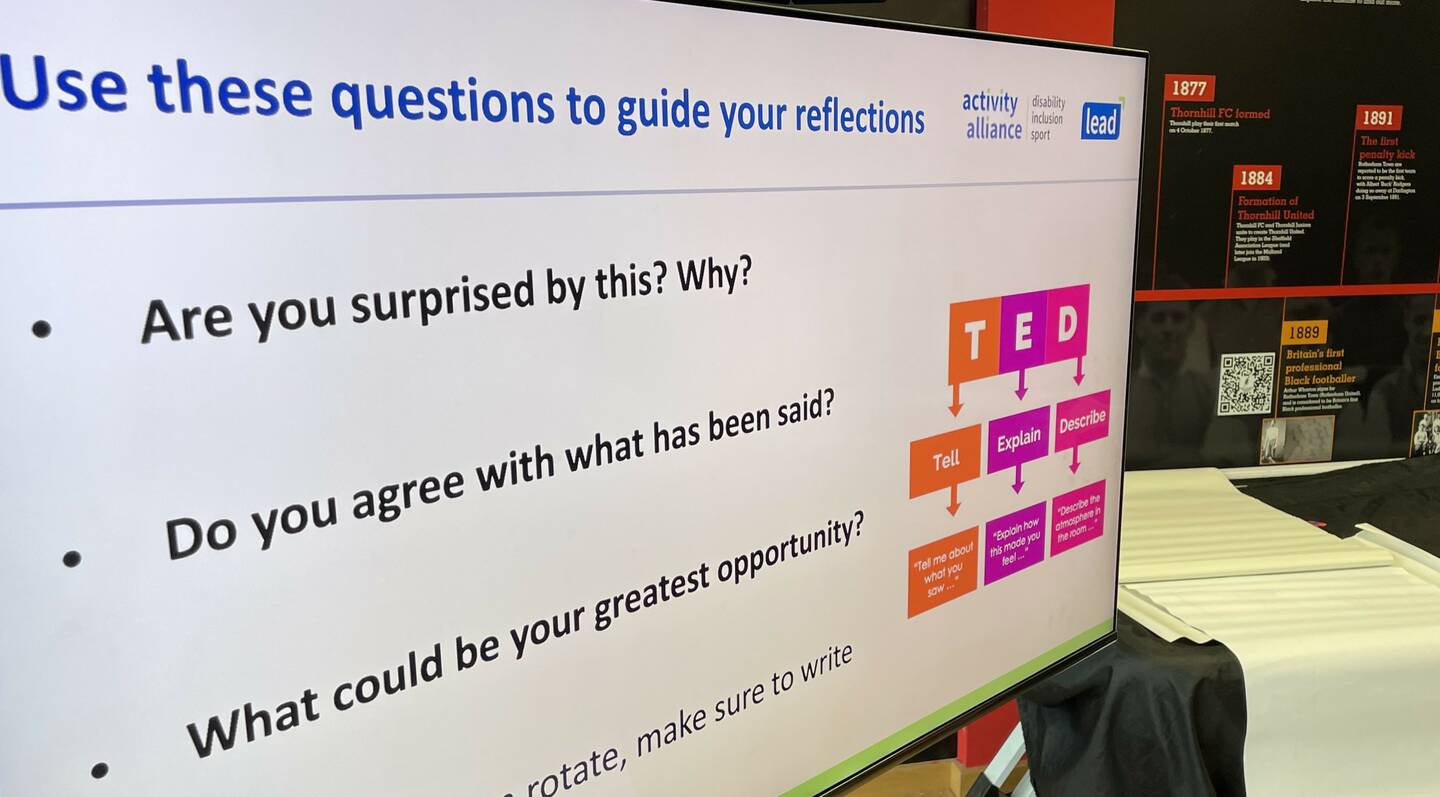
The session featured partners actively putting Leading Inclusion into practice with George Cull from North Yorkshire Sport and Ian Spencer from Active Humber. Sport Birmingham’s Nikki English also joined, sharing the viewpoint of an organisation yet to do the workshop.
Panellists reflected on how the framework has supported their inclusion work, from the motivations for engaging to the tangible changes made across their organisations and communities.
For many partners, Leading Inclusion plays a key role in place-based inclusion work, helping to bring together organisations and inclusion champions around shared goals. This alignment ensures organisations are not working in silos, which is especially important in areas facing high levels of deprivation and inactivity.
Panellists highlighted how the framework strengthens collaboration and relationships, building on trusted partnerships with the Activity Alliance team. Leading Inclusion provides a structured space to explore inclusion in greater depth and reinforces that responsibility for inclusion sits across whole organisations, not with one individual or team.
The value of external insight and challenge was also a recurring theme. External facilitation acts as a critical friend, encouraging honest reflection and supporting continuous improvement through clear action planning.
Active Humber shared how Leading Inclusion supported their work with Active Withernsea and the Physical Activity Community Engagement (PACE) network. Recognising the importance of accessibility, inclusivity and disability (AID), they established the PACE AID group, using the learning from Leading Inclusion to create the right conditions for meaningful, community-led change.
North Yorkshire Sport recognised that traditional recruitment methods weren’t reaching the diverse range of candidates they wanted to engage. Their goal was to remove barriers and create a process that encouraged applications from people of all backgrounds, abilities, and experiences. This was something they had identified this in their Diversity and Inclusion Action Plan (DIAP) and as part their annual improvement planning process.
But it also came out strongly in their leading Inclusion workshop. The work sawm them transform their recruitment process, creating a new recruitment pack. That resource was designed to make applying for roles at North Yorkshire Sport more transparent, inclusive, and welcoming.
Across the discussion, speakers emphasised how Leading Inclusion helps organisations go further in reaching inactive communities. One of the key takeaways was the ability for organisations to tackle inequalities in their areas by taking an intersectional approach. They can tackle the barriers in place thanks to this approach, something that sits at the heart of Leading Inclusion. Panellists also stressed the importance of recognising and celebrating existing good practice alongside areas for development.
Leading Inclusion is Activity Alliance’s framework that supports organisations, networks and places to embed inclusive practice. Through self-reflection, group discussion and action planning, it helps tackle persistent inequalities, encourages collaboration, and ensures disabled people can influence policy and decision-making.
You can find out more about Leading Inclusion on the Activity Alliance website.