Influencing campaigning, policy and decision making
Find out more about how we champion disabled people’s voices to advocate for change.
Making sure disabled people are heard
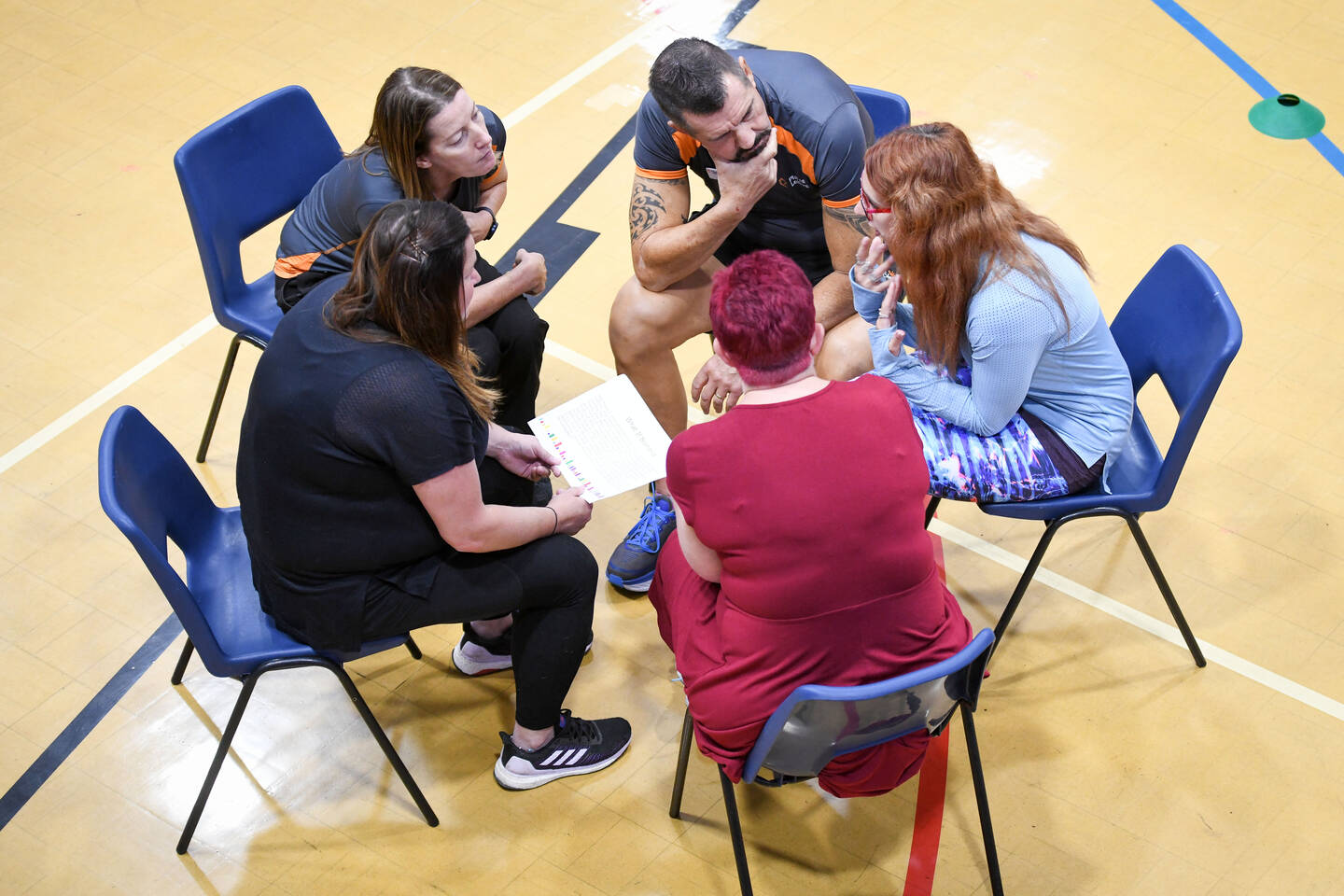
Disabled people tell us that they often feel overlooked and underrepresented in many ways. We provide spaces and opportunities for disabled people, parents, carers and supporters of disabled people, to share their experiences to help us influence change.
In December 2024, following the launch of our new strategy, we announced our first four ambassadors: Eve Roberts, Ben Andrews, Temi Johnson, and Harrie Larrington-Spencer. They joined Honorary President Tanni Grey Thompson, Vice Presidents John Amaechi OBE and Dr Phillip Friend OBE alongside the charity’s wider network to champion change so disabled people can be as active as they want to be.
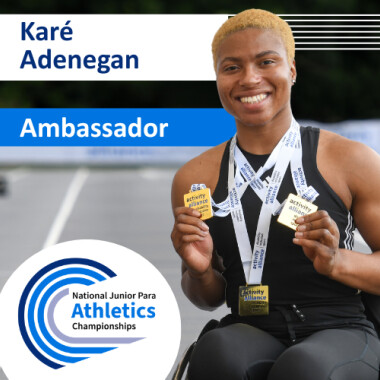
In July 2026 we welcomed paralympian Karé Adenegan as the inaugural ambassador for our National Junior Athletics Championships. Karé is a longtime supporter of the event, competing throughout her junior career and crediting it as an important part of her development as an athlete. Karé will help champion the event, inspiring more young disabled people to discover the opportunities athletics can offer while celebrating the unique role the Championships play in creating an inclusive and welcoming environment for all.
In our online events, reports, resources and training we strive to include disabled people’s voices. During our ADAS webinar we featured a powerful panel discussion with three disabled people who had taken part in the survey. They told us the reality of trying to take part in sport and activity. And as part of the launch of our new strategy – We all belong, we featured two excellent panel discussions with disabled people and sport sector leaders.
As part of our Get Out Get Active (GOGA) programme we hosted a series of podcasts – Active Together – where we talked to disabled people and activity providers about their experiences. The series was well received with each episode receiving hundreds of views.
Our new Include to Improve Lived Experience Network provides a safe space for disabled people to share their views of taking part and working in the sport and physical activity sector.
Being active in policy discussions, consultations and campaigns
We need government commitment and leadership, across education, health, employment, and transport to fix inactivity and deep-rooted inequalities. Our growing wealth of insight helps us to influence these conversations.
Over the past year we have continued to engage with policy makers, take part in sector working groups and contribute evidence to national debates. We have taken our three manifesto asks into parliamentary and public forums.
We have engaged in removing systemic barriers across health, education, transport and access to outdoor spaces so that more disabled people can be happier, healthier and more included in their communities. It included a meeting with Minister for Sport, Stephanie Peacock, to raise our concerns about the barriers to participation and the policy changes required.
We also successfully featured in the new APPG Outdoor Recreation & Access to Nature Inquiry Report published in September. You can view the report here. Our evidence to the All-Party Parliamentary Group for Outdoor Recreation and Access to Nature report, highlighted the scale of inaccessibility to countryside and green spaces and drew on the views of more than 750 organisations and individuals.
We helped in our ask to equip health and care workers by ensuring that better processes are in place to support disabled people to use physical activity in ways which work best for them. Following submitting an in-depth submission, our CEO, Adam Blaze, gave evidence to the Health and Social Care Committee’s inquiry into healthy ageing on the benefits of prescribing physical activity for older people with long-term conditions.
We boosted awareness of inclusive PE and school sport when we submitted a formal response to the Government’s proposed reforms to the SEND system. We raised concerns about proposals to restrict Education, Health and Care Plans to only the most complex cases.
We again highlighted the needs of disabled children in response to the Raising the Nation Play Commission’s findings on the importance of play. We welcomed the Government’s employment drive to create new jobs and apprenticeships but raised concerns about whether it will deliver meaningful, accessible opportunities for disabled people. We also campaigned to address widespread fears that increased activity could affect social security payments such as Personal Independence Payment, reinforcing our call to protect benefits.
We also responded to the 2025 Budget, calling for recognition of the social value of enabling disabled people to be active. We drew attention to the ‘activity gap’ at a cost to society of £10.9 billion, i.e. this would be the additional value if activity levels of disabled people were the same as non-disabled people.
Throughout the year we participated in a range of roundtables and consultations. Our Head of Communications and Policy took part in an All Party Parliamentary Group for Sport roundtable on women and girls in sport to inform forthcoming work on barriers to participation. This is a key area in our promotion of intersectionality among disabled people.
Responding to Sport England survey results
In December 2025, we responded to Sport England’s Active Lives Children and Young People Survey. Over 130,000 pupils in Years 1-11 (aged 5-16) and their parents, took part in the survey. Our research team analysed the data to highlight the differences for disabled children and young people. Our research report, Play, move, belong: Active futures for young disabled people, published in November 2025, explores young disabled people’s experiences and perception of sport and physical activity.
We also responded to Sport England’s Active Lives Adult Survey in April 2026. While overall activity levels are at a record high, and continue to rise, significant inequalities remain. Disabled people are still one of the least active groups and are far more likely to be inactive than non-disabled people (39.3% vs 19.7%).
Maximising investment
We must maximise our and partners’ investment, so we get the best for the people we champion.
We actively seek to increase our charity investment, diversify our income streams, and influence partner investment to improve disabled people’s opportunities to be active.
- In July 2024 we became a Chartered Institute for the Management of Sport and Physical Activity (CIMSPA) Training Provider Partner. Shortly after, in September, we launched our online Learning Hub, allowing people and organisations to access paid-for training and learning linked to disabled people’s inclusion in sport and physical activity. This continues goes from strength to strength, with new courses and content being added regularly.
- Funding from Sport England in May 2025 ensured that our life-changing Get Out Get Active programme can continue for another year.
- In March 2025, additional investment from Sport England’s recover and reinvent fund enabled us to launch our new Include to Improve programme in partnership with Sport for Confidence. The two-year programme to create more opportunities for disabled people to take part, volunteer and work in sports and activities.
- In 2023 we delivered a large-scale inclusion project with The Football Association (FA) to encourage more local football clubs to open their doors to disabled people. We supported the FA to develop an online toolkit and disability training workshop to support grassroots football clubs in growing disability provision. We continue to support this.
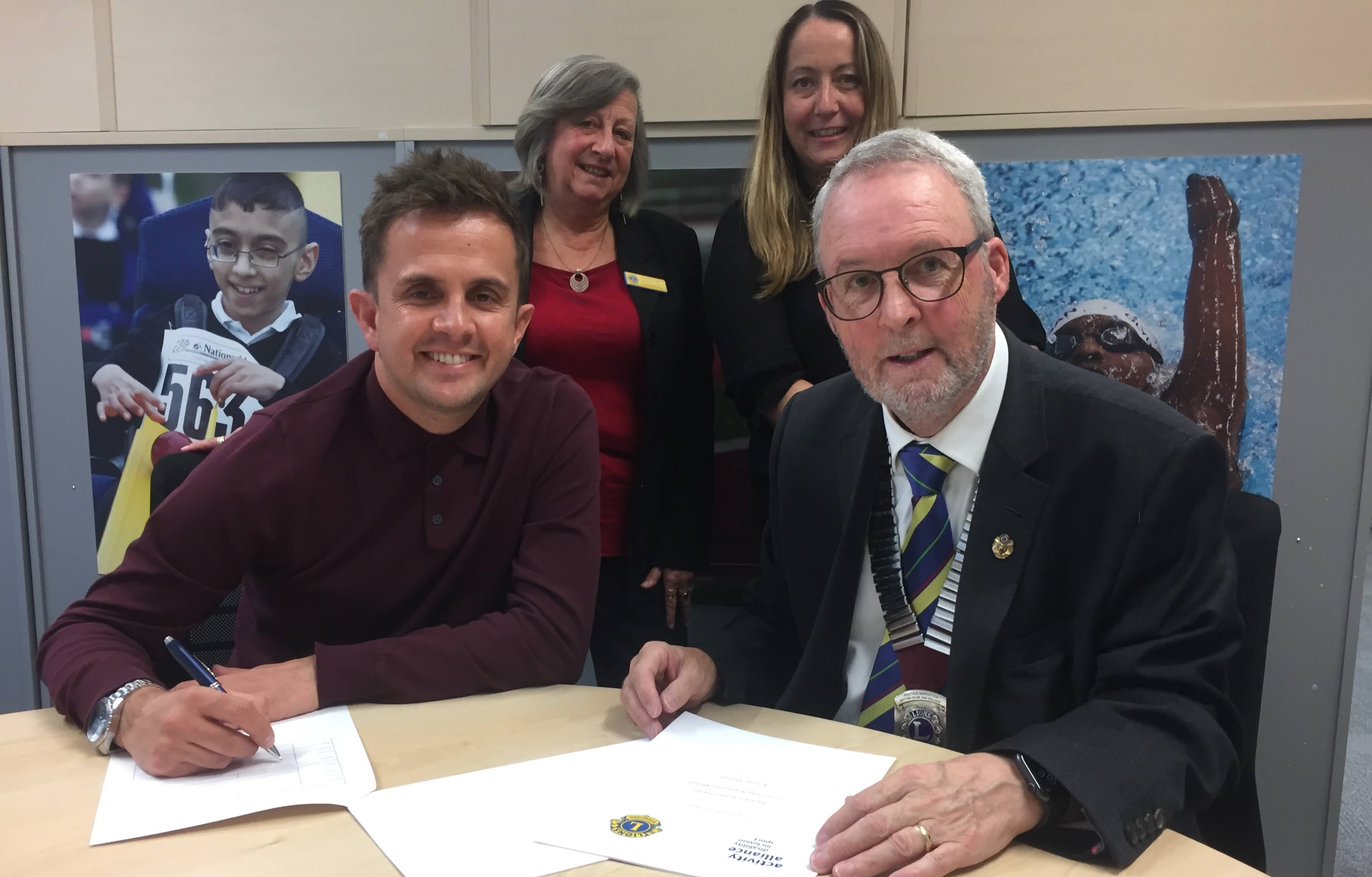
- In November 2023 we renewed our partnership with Lions Clubs British Isles. For more than 20 years, Lions Clubs have been supporting Activity Alliance regional games and National Junior Athletics Championships. By fundraising and volunteering, Lions Clubs allow the event to be a success year on year.
- We also provide inclusive research and inclusive communications training and consultancy services for multiple partners.
This strategic and financial development ensures that we can continue to improve disabled people’s inclusion and involvement in sport and activity at all levels for many years to come.
Our internal income generation group meets to discuss and plan ahead. This includes on our fundraising strategy, where we engage in various events during the year. One of these events is the London Marathon. We are proud to receive the support from many generous fundraisers during the year who raise money for us in their way.
Impact stories
Read more about how we champion disabled people’s voices to advocate for change.